Why Should You Avoid Driving with an Almost Empty Fuel Tank?
Regularly driving with an almost empty tank can place additional strain on the fuel pump, interrupt the fuel supply and unexpectedly leave you stranded.
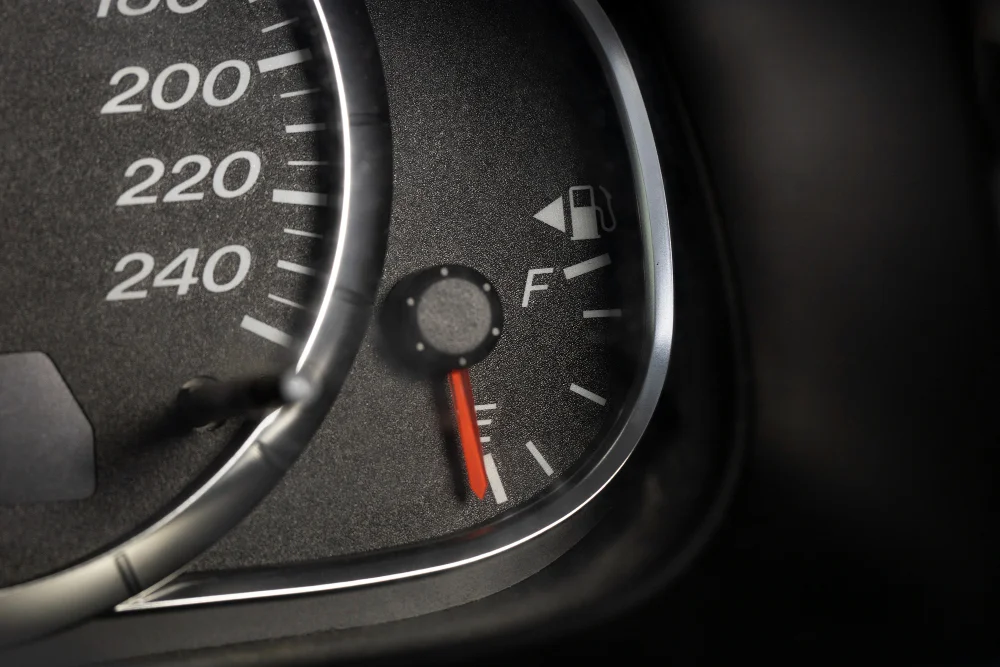
Many drivers wait until the low-fuel warning light comes on or the estimated driving range approaches zero before visiting a petrol station. Doing this occasionally will not usually harm the vehicle. However, regularly driving with an almost empty tank is not a good habit. It can place additional strain on the fuel pump, cause interruptions in the fuel supply and result in the car unexpectedly coming to a stop.
The Fuel Pump Needs Cooling
In many modern vehicles, the electric fuel pump is located inside the fuel tank. The surrounding fuel helps cool the pump and lubricate its moving components. When the fuel level becomes very low, the pump may not receive the same level of cooling.
Driving once with a small amount of fuel is unlikely to destroy the pump. However, if this happens regularly, the pump may run hotter more frequently, potentially shortening its service life. Replacing a fuel pump can be considerably more expensive than refuelling in good time.
The Fuel Supply May Be Temporarily Interrupted
In an almost empty tank, the remaining fuel moves more freely from one area to another during braking, acceleration, cornering and driving on slopes. In certain situations, the fuel pickup may temporarily fail to receive enough fuel.
As a result, the engine may hesitate, lose power or stop completely. This is more likely to happen during a sharp turn, strong acceleration or while driving on a steep incline.
The Estimated Driving Range Is Not Always Accurate
The remaining range shown on the instrument panel is an estimate rather than a guarantee. The vehicle calculates it using previous fuel consumption, driving speed and other information.
Actual fuel consumption can increase for several reasons:
- cold weather and engine warm-up;
- short urban journeys;
- higher driving speeds;
- heavy traffic and frequent acceleration;
- a heavy load or trailer;
- steep hills and strong headwinds.
If the display shows 30 kilometres of remaining range, this does not guarantee that the vehicle will cover exactly that distance under all conditions. Some models retain a small reserve, but drivers should not deliberately rely on it.
What About Dirt at the Bottom of the Tank?
A common claim is that an almost empty tank causes the fuel system to draw dirt from the bottom. In reality, the system already collects fuel from the lower part of the tank, while the fuel filter is designed to capture larger particles.
Nevertheless, an old, poorly maintained or contaminated fuel system may contain sediment, rust or water. When the fuel level is low, the concentration of contaminants may be higher, while a clogged filter can restrict the fuel supply. It is therefore important to follow the vehicle’s maintenance schedule and replace the fuel filter when required.
Does an Empty Tank Produce More Condensation?
A partially empty tank contains more air space, so temperature changes can theoretically lead to increased condensation. However, fuel systems in modern vehicles are relatively well sealed, meaning this is not usually the greatest risk under normal conditions.
Moisture may be a more significant issue in older vehicles, during extended storage or when temperatures fluctuate considerably. In a petrol engine, water can contribute to corrosion and uneven operation. In a diesel vehicle, it can also cause problems for sensitive high-pressure pumps and fuel injectors.
A Diesel Vehicle Should Not Be Run Completely Out of Fuel
If a diesel vehicle’s tank becomes completely empty, air may enter the fuel system. After refuelling, the engine may not start immediately, and some vehicles require the system to be bled before the engine can be restarted.
Modern diesel systems operate at extremely high pressures and contain precisely manufactured components. Running without sufficient fuel may damage these parts. It is therefore sensible to refuel a diesel vehicle before the engine stops.
Running Out of Fuel Can Be Dangerous
If the engine stops in moving traffic, the situation can quickly become dangerous. Running out of fuel is particularly risky on a motorway, at an intersection, inside a tunnel or on a section of road with poor visibility.
Steering and braking may become more difficult after the engine stops because the steering and brake assistance may no longer operate normally. The car will remain controllable, but bringing it to a safe stop may require considerably more physical effort.
When Should You Refuel?
There is no need to fill the tank completely during every visit to a petrol station, but constantly driving with the warning light illuminated is not advisable either. A practical approach is to plan to refuel when approximately one-quarter of the tank remains.
It is sensible to keep a larger reserve before a long journey, during cold winter weather or when travelling through an area with few petrol stations. Traffic congestion, a road closure, an unexpected diversion or a power failure at a petrol station can increase both the journey distance and fuel consumption.
Conclusion
The low-fuel warning light does not mean that the vehicle will immediately suffer damage. The greater concern is allowing driving with an almost empty tank to become a regular habit.
A low fuel level can reduce fuel-pump cooling, cause interruptions in the fuel supply during cornering or on slopes, and unexpectedly leave the driver stranded. The simplest solution is not to wait until the last moment and to refuel while a reasonable reserve still remains in the tank.