
Studded vs Studless Winter Tyres in Estonia
Winter driving in Estonia can be unpredictable. One day the roads are covered in snow, the next day it rains, and by morning the asphalt may be dangerously icy.
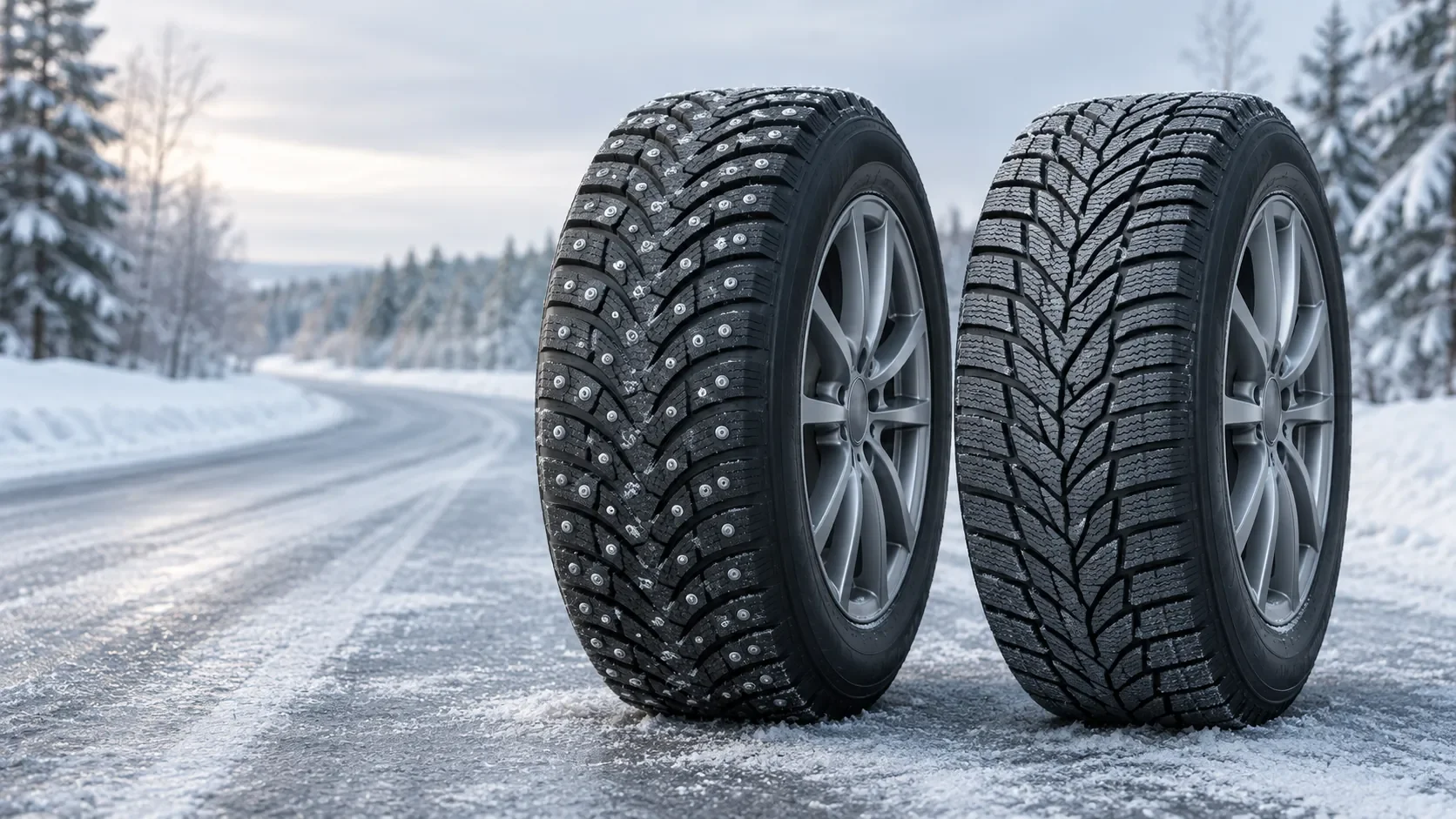
Winter driving in Estonia can be unpredictable. One day the roads are covered in snow, the next day it rains, and by morning the asphalt may be dangerously icy. This leaves many drivers facing the same question every winter: should they choose studded or studless winter tyres? Both have advantages, and the best choice depends largely on where and how you drive.
What is the difference between studded and studless winter tyres?
Studded winter tyres have small metal studs embedded in the tread. These studs help the tyres grip icy surfaces, making them particularly useful on black ice and poorly maintained roads.
Studless winter tyres, also known as friction tyres, use special rubber compounds and numerous small grooves called sipes. These features help maintain traction on snow and ice without metal studs.
Which tyres perform better on ice?
Studded tyres often have an advantage on ice, particularly during braking. Their metal studs can penetrate the icy surface and provide additional grip.
However, modern Nordic studless winter tyres have improved considerably. Some premium models perform exceptionally well in independent ice tests and can even outperform certain studded tyres. The actual results depend on the tyre model and test conditions.
What about snow and wet asphalt?
On snowy roads, high-quality studded and Nordic studless tyres can offer comparable traction. Their performance depends on tread design, rubber compound and overall condition.
On wet asphalt, there is no universal winner. Braking distances and handling vary significantly between individual tyre models, so comparing independent tyre tests is useful before making a purchase.
Advantages and disadvantages of studded tyres
Advantages:
- Often provide superior traction on smooth ice.
- Suitable for icy rural and less frequently maintained roads.
- Can offer additional safety in severe icy conditions.
Disadvantages:
- Produce more road noise.
- Cause greater wear to road surfaces.
- Their use is restricted to specific periods in Estonia.
Advantages and disadvantages of studless tyres
Advantages:
- Generally quieter and more comfortable.
- Do not damage asphalt with metal studs.
- Well suited to everyday urban driving.
- Can legally be used throughout the year, although winter tyres are not recommended for summer driving.
Disadvantages:
- May provide less grip on extremely slippery ice.
- Performance varies considerably between models.
- Choosing tyres designed for Nordic winter conditions is important.
When are winter tyres mandatory in Estonia?
Winter tyres are mandatory in Estonia from 1 December until 1 March. Studded tyres are generally permitted from 15 October until 31 March. In winter road and weather conditions, they may also be used from 1 October until 30 April.
The legal minimum winter tyre tread depth is 3 mm, although replacing tyres at approximately 4 mm is recommended for safety. Studless winter tyres must carry the 3PMSF symbol, showing three mountain peaks and a snowflake. The M+S marking alone is not sufficient.
Which winter tyres should you choose in Estonia?
If you mostly drive in Tallinn or other cities where roads are regularly maintained, high-quality Nordic studless tyres may be an excellent option. They provide a quieter and more comfortable driving experience.
If you frequently travel on rural roads, drive early in the morning or encounter black ice, studded tyres are worth considering.
The conclusion is simple: neither tyre type is best in every situation. Choosing quality tyres suited to your driving conditions matters more than choosing one category blindly. Regardless of your choice, maintaining a safe distance and adjusting your speed to winter road conditions remain essential.