
Where Did the Logos of Famous Car Brands Come From?
A car brand logo is much more than a decorative emblem. Many well-known automotive symbols are more than a hundred years old and are connected to company founders, historical events, engineering achievements, or the region where the manufacturer was established.
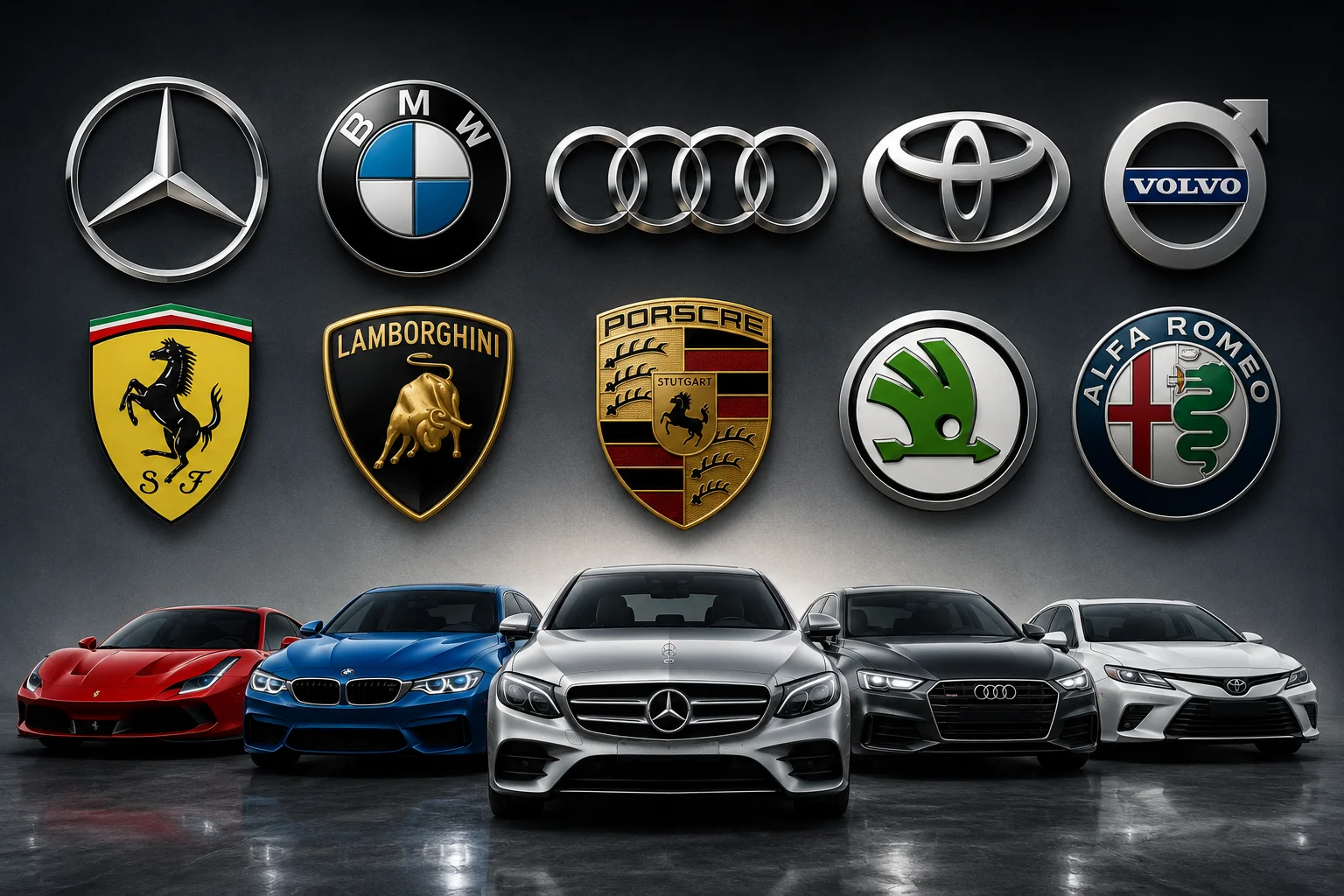
A car brand logo is much more than a decorative emblem. Many well-known automotive symbols are more than a hundred years old and are connected to company founders, historical events, engineering achievements, or the region where the manufacturer was established.
Some logos have an obvious meaning, while others have fascinating stories that many car owners have never heard.
Mercedes-Benz – the Three-Pointed Star
The Mercedes-Benz three-pointed star represents the company's ambition to produce engines for use on land, at sea, and in the air.
The idea for the symbol came from Gottlieb Daimler. After his death, his family suggested using the star as the company's emblem, and it was officially registered as a trademark in 1909.
BMW – Is It Really an Aircraft Propeller?
For many years, people believed that the BMW logo represented a spinning aircraft propeller. In reality, this is one of the most common myths in the automotive world.
The blue and white sections refer to the colors of Bavaria, the German region where BMW was founded.
There is still a genuine connection to aviation because BMW originally manufactured aircraft engines. The propeller interpretation became popular later because of the company's advertising materials.
Audi – Four Rings
The four rings in the Audi logo represent the merger of four independent vehicle manufacturers into Auto Union in 1932.
- Audi;
- DKW;
- Horch;
- Wanderer.
Each ring represents one of the companies that participated in the merger.
Toyota – Three Ovals
At first glance, the Toyota logo appears quite simple, but it contains several different meanings.
The two inner ovals represent the heart of the customer, the heart of the company, and the trust between them. The outer oval connects these elements and represents Toyota's global presence.
It is also possible to form every letter in the word Toyota from the individual lines of the logo.
Volvo – the Symbol of Iron
The circle and arrow used in the Volvo logo are sometimes mistakenly interpreted only as a male symbol.
In fact, it is an ancient chemical and alchemical symbol for iron. Swedish steel was known for its strength and quality, so Volvo wanted its vehicles to be associated with durability, safety, and high-quality metalwork.
Ferrari – the Prancing Horse
Ferrari's famous black horse is connected to the Italian military pilot Francesco Baracca, who used the symbol on his aircraft.
After the pilot's death, his family suggested that Enzo Ferrari use the horse on his racing cars because they believed it would bring him good luck.
The yellow background represents Modena, the hometown of Enzo Ferrari.
Lamborghini – the Powerful Bull
Lamborghini founder Ferruccio Lamborghini was born under the zodiac sign Taurus and had a strong interest in bullfighting.
For this reason, the bull became the company's symbol. It represents strength, aggression, character, and the power of Lamborghini sports cars.
Many Lamborghini models have also been named after famous fighting bulls.
Porsche – the Coat of Arms of Stuttgart
The Porsche logo combines several historic German symbols.
The horse in the center comes from the coat of arms of Stuttgart, where Porsche has its headquarters. The other elements, including the antlers and the red and black stripes, come from the coat of arms of the former state of Württemberg.
Škoda – the Winged Arrow
The exact origin of Škoda's winged arrow is not fully known, and several different explanations exist.
According to the most common interpretation, the logo represents:
- speed;
- precision;
- technical progress;
- forward movement.
The winged arrow has been used for more than a century and has become one of the most recognizable symbols of Czech industry.
Alfa Romeo – the Cross and the Serpent
The Alfa Romeo logo combines two historic symbols of Milan.
- The red cross on a white background comes from the coat of arms of Milan.
- The crowned serpent, known as the Biscione, was the symbol of the Visconti family, which ruled Milan during the Middle Ages.
The exact meaning of the person shown inside or emerging from the serpent's mouth is still debated. Nevertheless, it remains one of the most unusual and historically detailed logos in the automotive industry.
Conclusion
Most famous automotive logos were not created by accident. Behind them are company histories, personal stories of founders, regional symbols, engineering achievements, and national traditions.
The next time you see a familiar car emblem, remember that it is not merely a decorative badge, but part of the long history of the global automotive industry.