Когда нужно менять ремень ГРМ в автомобиле?
Через сколько километров менять ремень ГРМ? Признаки износа, последствия обрыва и необходимость замены помпы. Полезные советы автомобилистам.
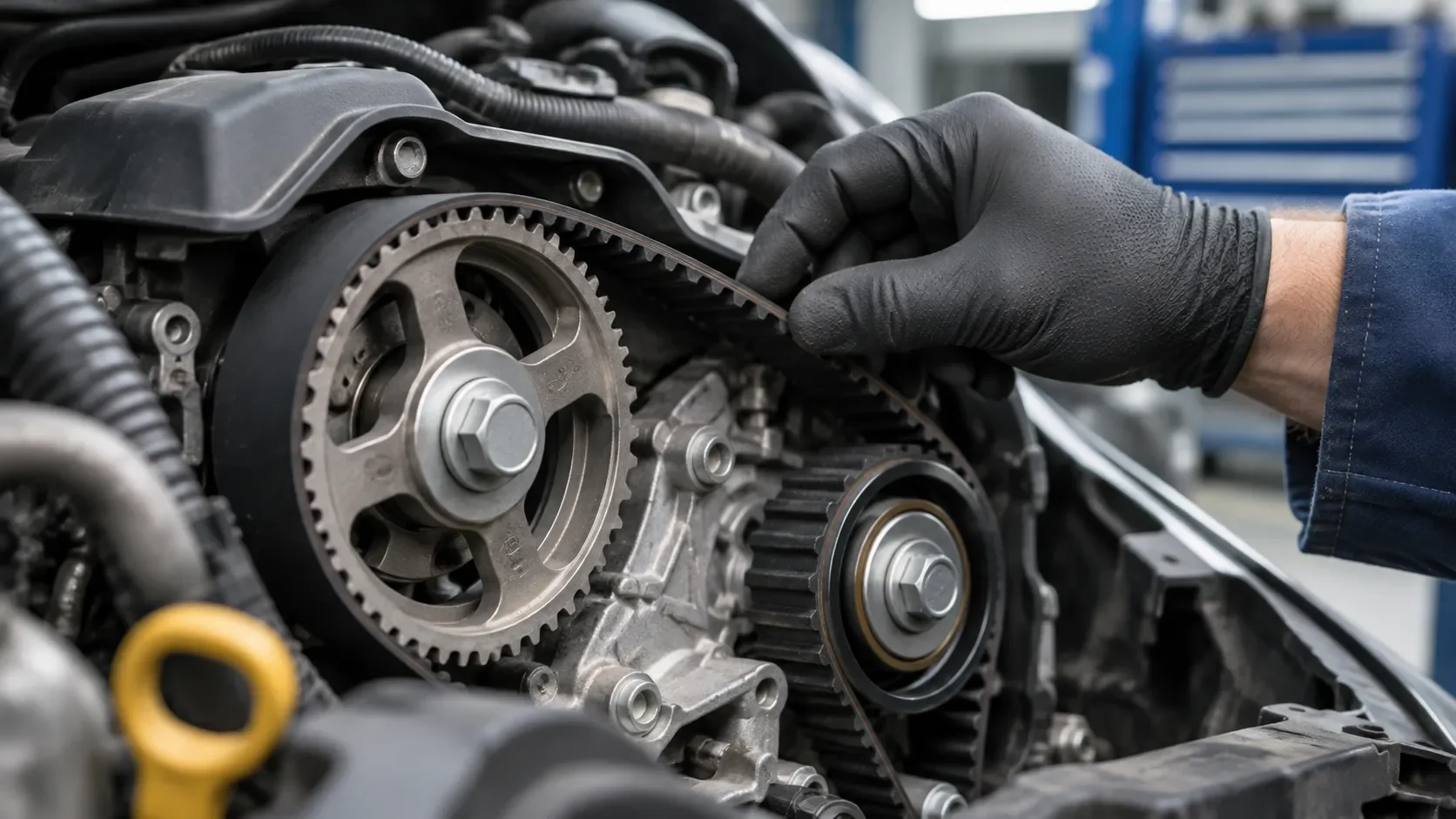
The timing belt is one of the most important components of a car engine, yet many drivers rarely think about its condition. Unlike brake pads or engine oil, a worn timing belt often provides no obvious warning signs. However, if it suddenly breaks, the consequences can be serious and expensive. Understanding when to replace your timing belt is therefore essential for avoiding unexpected engine damage.
What is a timing belt and what does it do?
A timing belt connects the crankshaft and camshaft, ensuring that they rotate in precise synchronisation. This allows the engine's valves to open and close at exactly the right time in relation to the movement of the pistons.
If the timing belt breaks or skips teeth, the engine's timing can become incorrect. In many engines, this may cause the pistons to collide with the valves, resulting in significant mechanical damage.
How often should a timing belt be replaced?
Timing belt replacement intervals vary depending on the vehicle manufacturer, engine design and maintenance specifications. Some engines require replacement after approximately 60,000 kilometres, while others have intervals exceeding 200,000 kilometres.
However, mileage is not the only factor. Timing belts also age over time, even when a vehicle is driven relatively little. Manufacturers may therefore specify a replacement interval based on years of service, regardless of mileage.
The most reliable way to determine the correct interval is to check your vehicle's official maintenance schedule. If necessary, an authorised dealer can confirm the requirements using the vehicle identification number (VIN).
What are the warning signs of a worn timing belt?
A deteriorating timing belt does not always produce noticeable symptoms. Nevertheless, certain signs may indicate potential problems:
- Visible cracks or damage to the belt.
- Frayed or excessively worn belt edges.
- Unusual noises coming from the timing belt area.
- Engine oil or coolant contamination on the belt.
- Damaged tensioners or guide pulleys discovered during inspection.
It is important to understand that a timing belt can fail without any obvious warning. Therefore, waiting for symptoms before scheduling replacement is not recommended.
What happens if the timing belt breaks?
When a timing belt breaks, the synchronisation between the crankshaft and camshaft is lost. In many engines, moving pistons may strike open valves, potentially causing bent valves, damaged pistons or cylinder head damage.
The severity of the damage depends on the engine design and the conditions at the moment of failure. Some engines may escape with relatively minor damage, while others require extensive and expensive repairs.
If you suspect that the timing belt has broken, avoid attempting to restart the engine. The safest option is to have the vehicle transported to a workshop.
Should the water pump be replaced with the timing belt?
In many vehicles, the timing belt also drives the engine's water pump. In these cases, replacing the water pump at the same time is often recommended because replacing it later may require dismantling the same components again.
Timing belt replacement commonly includes installing new tensioners and idler pulleys. Depending on the engine, replacement bolts and additional components may also be required.
The best approach is to use a complete timing belt kit designed for the specific engine and follow the manufacturer's maintenance instructions.
What should you check when buying a used car?
When purchasing a used vehicle, it is important to ask when the timing belt was last replaced. Ideally, the seller should provide supporting documentation, such as workshop invoices or records from the vehicle's service history.
If the replacement history is unknown, consider having the vehicle inspected by a qualified mechanic and include potential timing belt replacement costs in your purchase budget.
It is also worth remembering that not every engine uses a timing belt. Some vehicles have a timing chain instead, which has different maintenance requirements.
Conclusion: prevention is better than expensive repairs
Replacing a timing belt at the correct interval is one of the most important preventive maintenance procedures for many vehicles. Although the replacement itself can be relatively expensive, repairing an engine damaged by a broken timing belt can cost significantly more.
Do not rely on mileage alone — consider the age of the timing belt and the vehicle's service history. Timely maintenance can help prevent unexpected breakdowns and extend the lifespan of your engine.